Structural Reforms for Government Accountability
*The conflicts of interest mentioned in this section are substantially more pronounced at the federal level, yet still highly significant at the State level, and a definitive problem for the system overall.
*Delaware has many elected officials and candidates for office, on both sides, that are truly good people and in it for the right reasons. Being a major-party politician/candidate does not automatically make someone corrupt. We encourage voters to see individuals - look past party labels, vet candidates for their qualifications, track-record, policies and conflicts - and place People over Party.
The Problem:
Government should be efficient, responsive, and limited to what is necessary - instead, many elected officials spend the bulk of their time fundraising, serving donors and special interests rather than the people they were elected to represent.
- Whether 0%, or 100% of Americans are in favor of a bill, there is a 30% chance Congress will pass it.
- The average U.S. Senator spends 70% of their time fundraising - not solving problems for their constituents.
- Politics is now a multi-billion-dollar industry - the Democratic/Republican Parties and their wealth-building career politicians have financial conflicts of interest.
- Too often public office is used as a path to personal wealth - leveraging industry-funded campaigns to represent the interests of those industries rather than the People. Public service should be an honor, not a career built on political power and financial gain.
The Cause:
The Democratic/Republican Parties are led by corporations (DNC and RNC) and are largely funded by other corporations, special interests, or big donors with a personal agenda. These financial backers invest in politicians - who are effectively party employees - in exchange for loyalty, influence, and favorable policy.
This deep industry influence, corruption, and hyper-partisanship have led to legislative gridlock, bureaucratic inefficiencies, and a growing disconnect between government and its electorate. This mismanagement disrespects citizens, taxpayers, and erodes public trust.
The current system is built on dependence - not independence.
The Path Forward:
-
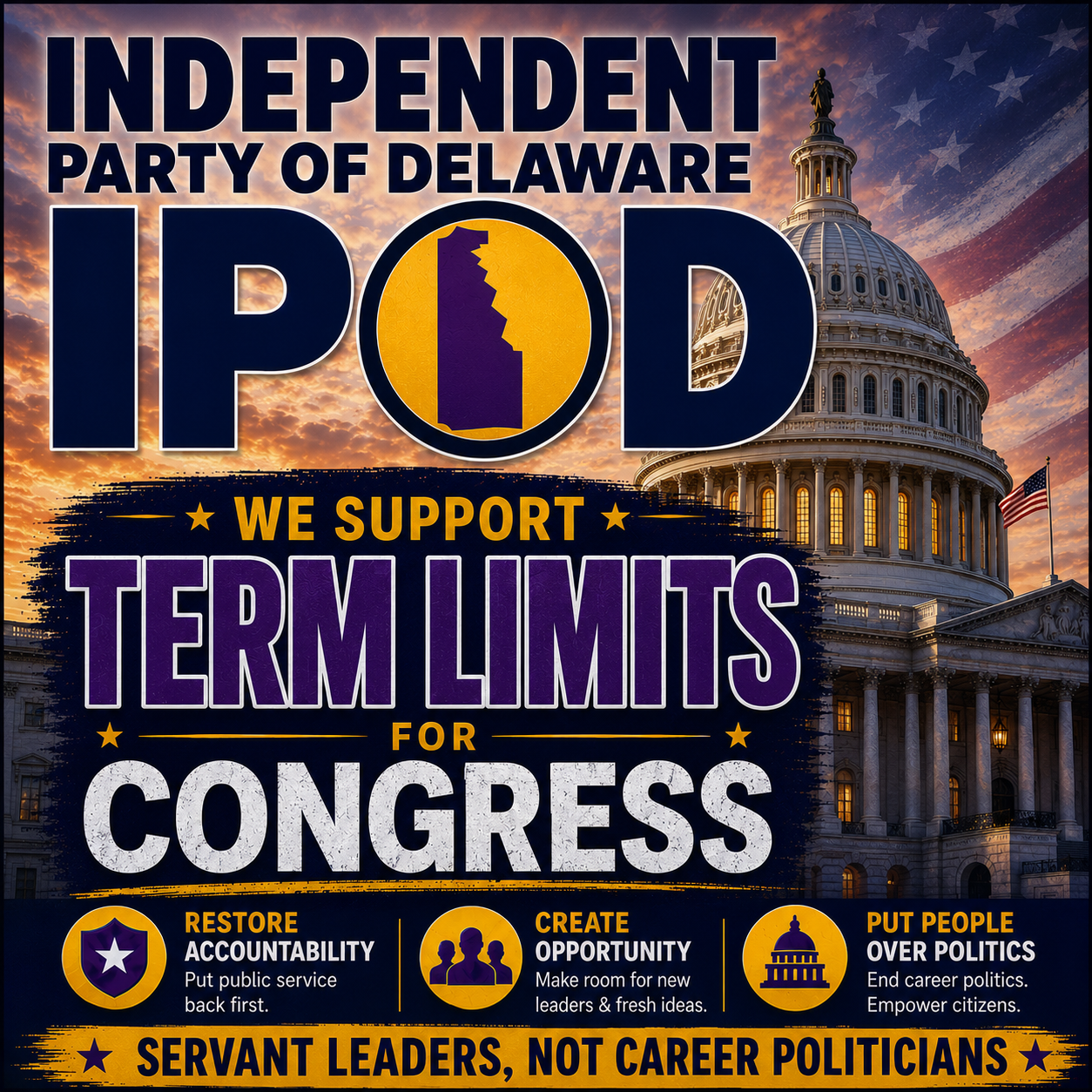
Term Limits for Congress and General Assembly
- Encourages citizens with real-world experience and the right motivations to step forward and serve.
- Reduces entrenched power and the long-standing ties between candidates and special interests.
- Brings fresh perspectives and prioritizes public service over political survival.
-
Congressional and Federal Official Stock Trading Ban
- Prohibit members of Congress from trading individual securities while in office and for a set period afterward.
- Removes obvious conflicts of interest.
- Ensures elected officials serve the public - not their portfolios.
-
Single Issue Bills Only, for Congress
- The big reason why "Congress can't get anything done!" Multi-issue bills are used for Political Theater - one team will take a universally popular policy, package it with a policy the other team doesn't like, to then turn it into mainstream media/social media headliners in an attempt to blast the other team. We are better than this...
-
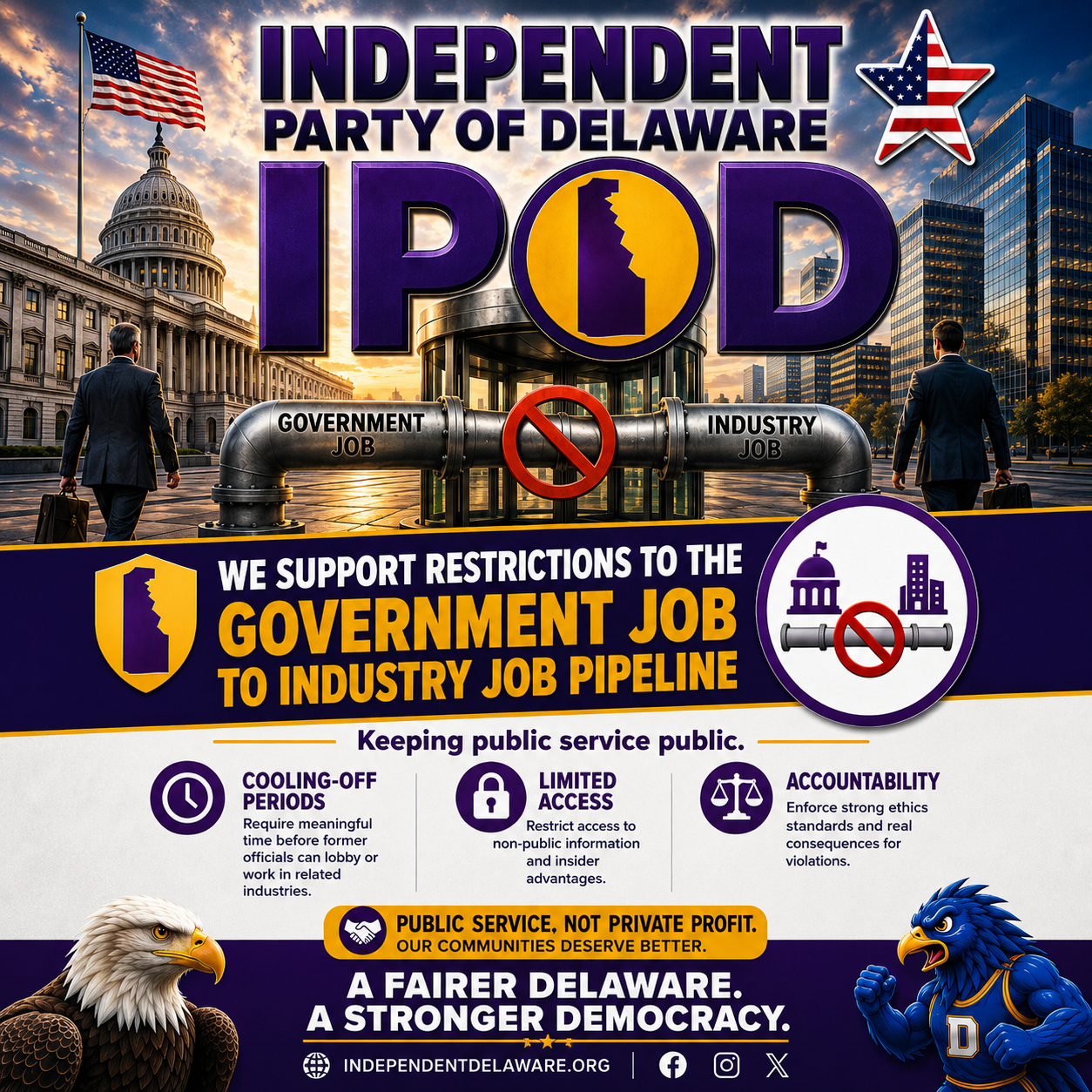
"Revolving Door" Restrictions
- (The "revolving door" is a term used to describe the "government-job-to-industry job-pipeline").
- Ban U.S. Senators from ever becoming lobbyists.
- Ban, or at minimum, require significant "cooling off" periods before any other elected official can work as a lobbyist.
- Do the same for government officials in regulatory positions-to-the industries they regulate.
-
Lobbying Control
- Corporate special interest groups have undue and inordinate influence and direction over legislation, public policy and administration through an elaborate system of lobbying, gifts and other considerations. These activities corrupt the political process. All forms of gifting should be outright banned, current restrictions (if any) strengthened to the maximum degree, and exploited loopholes closed.
-
Campaign Finance Transparency and Regulation
- Dark money has no place in our elections. Full transparency required.
- Support legislation that gets the corrupting influence of money out of our politics.
- Support candidates who are qualified, independent servant leaders - free from financial conflicts of interest and genuinely committed to public service, not personal or party gain.
-
ELECTED Inspector(s) General
- Independent, non-partisan oversight positions at all levels of government to ensure real accountability.
- The People deserve an effective public advocate charged with defense of public integrity in the face of public corruption, waste, fraud, mismanagement and abuse of power. We believe in a State Office of Inspector(s) General having investigative, subpoena and prosecutorial powers over state and local government corruption.
-
Initiative, Referendum and Recall
- Delaware is the only state in which the General Assembly can amend the state constitution without submitting the amendment to voters for ratification. Every other state requires voters to approve legislature-proposed constitutional amendments before they become effective. Modern Delaware government must, at all levels, be restructured away from special interests towards the greater common interest. We hereby propose and advocate state constitutional amendments establishing:
- Initiative – The right of citizens to draft and propose legislation;
- Referendum – The right of citizens to ultimately vote on legislation and constitutional amendments
- Recall - The right of citizens to dismiss elected officials for just cause.
- Delaware is the only state in which the General Assembly can amend the state constitution without submitting the amendment to voters for ratification. Every other state requires voters to approve legislature-proposed constitutional amendments before they become effective. Modern Delaware government must, at all levels, be restructured away from special interests towards the greater common interest. We hereby propose and advocate state constitutional amendments establishing:
-
County Government Reform
- All Delawareans should have the opportunity to vote for a County President. In Sussex County Council and Kent Levy Court, make this position one that is elected at-large by the constituents of the County (it is already this way in NCC).
Accountability isn’t partisan - it’s essential. Together, we can build a government of, by and for the people that works efficiently, transparently, and in the best interests of Delawareans. Let's return to the ideal of Citizen Servant Leaders - leaders who answer to the people - not party bosses, donors, or personal financial incentives.


Do you like this page?